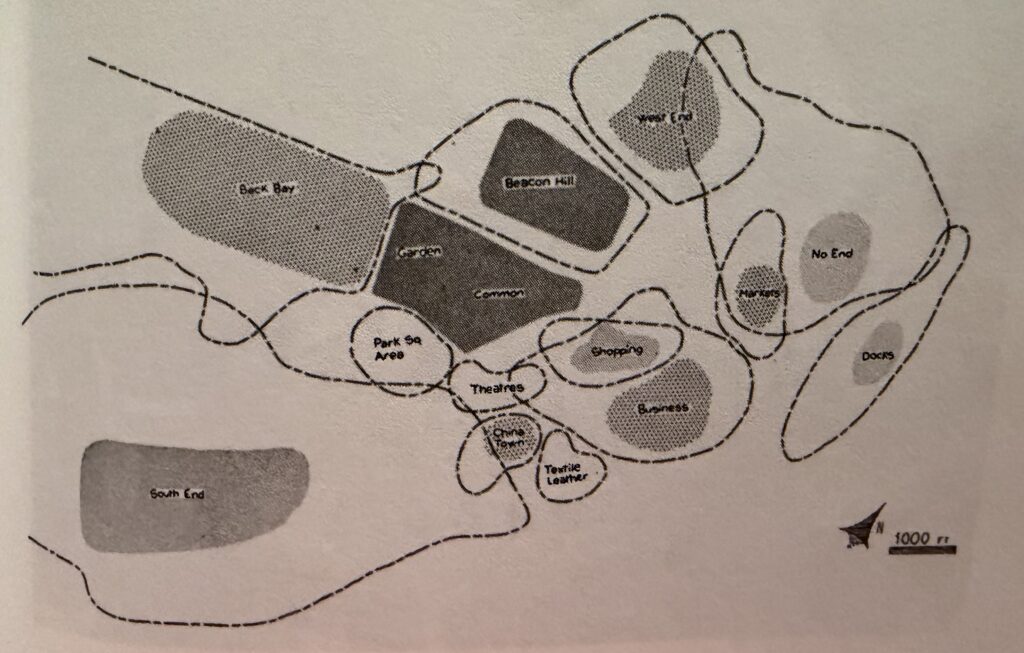
When I refer to neighborhoods, I am not limiting the term to purely residential areas. Instead, I am using the concept in Kevin Lynch’s broader sense of districts. In The Image of the City (1960), Lynch identifies five key elements that shape how people construct mental maps of urban environments:
Paths: streets, sidewalks, and transit routes along which people move
Edges: physical or perceptual boundaries such as rivers, walls, or highways
Districts: areas with a shared identity or character
Nodes: strategic focal points, including plazas, intersections, or transit hubs
Landmarks: distinct and memorable features used as reference points
Expanding on this idea, Lynch defines districts (or neighborhoods) as:
“relatively large city areas which the observer can mentally go inside of, and which have some common character…the characteristics that determine districts are thematic continuities which may consist of an endless variety of components (Lynch, 1960).”
The image above depicts Kevin Lynch’s conceptualization of urban districts in Boston, as presented in The Image of the City (1960, p. 69).